

Mostly because cocoa, chocolate’s main ingredient, hit record prices after poor harvests in West Africa. Cocoa futures, the bulk trading price for ordinary cocoa, reached $12,906 a metric ton in December 2024. By October 30, 2026, they had fallen to $5,453, but chocolate makers buy cocoa months ahead, so shelf prices are slow to follow.

We’re a small chocolate maker in Arizona, and we buy cacao too. Cacao and cocoa are the same beans, and the markets call them cocoa (more on the two words in cacao vs cocoa). This page covers what happened to cocoa, and what goes into the price of a bar like ours.
On this page: Why prices spiked · Why chocolate hasn’t caught up · How much prices rose · Tariffs · Will prices come down? · Why craft chocolate costs more · What goes into our bars · Why a STUFFT bar is $35 · Is it worth it?
Why did cocoa prices spike?
The two biggest growers had a terrible year. In the 2023/24 season, Côte d’Ivoire (Ivory Coast) harvested about a quarter less cocoa than the year before and Ghana nearly a third less, according to the International Cocoa Organization:
| Metric tons of cocoa beans | 2022/23 | 2023/24 |
|---|---|---|
| Côte d’Ivoire | 2.24 million | 1.67 million |
| Ghana | 654,000 | 449,000 |
| The whole world | 5.02 million | 4.37 million |
The supply couldn’t bounce back quickly. The Federal Reserve Bank of St. Louis points to three reasons: a changing climate that has left many cacao trees poorly suited to where they grow, a virus spreading through plantations, and new trees that take three to four years to bear fruit.
If cocoa costs less now, why doesn’t chocolate?
The cocoa in the chocolate you buy now was paid for long ago. Buyers usually lock in cocoa contracts up to 12 months before the harvest, the US Bureau of Labor Statistics explains, and in December 2025 Bloomberg reported that big manufacturers were still working through beans they had bought at the top.
Some changes also stick around. Big confectioners passed their higher costs on through higher prices and smaller packages, and some changed their recipes, which Bloomberg noted is hard to undo.
How much have chocolate prices gone up?
The government doesn’t track chocolate on its own, but its closest measure, prices for sweets and chewing gum, rose about a third from December 2019 to November 2024. Prices for imported cocoa, a figure that covers beans, cocoa butter, cocoa powder and chocolate, more than doubled. Both numbers come from the Bureau of Labor Statistics:
| Prices tracked by the government | How much they rose |
|---|---|
| Sweets and chewing gum in US stores | Up 32% |
| Cocoa and chocolate imported into the US | Up 107% |
Those figures stop in November 2024, just before cocoa hit its record, so the rise since then isn’t in them. The same years include the jump in food prices in 2022, which the bureau notes has since eased, so cocoa isn’t the only reason sweets cost more.
Did tariffs raise chocolate prices?
They were part of the picture in 2025. That year the US put new tariffs, usually 15%, on imports from cacao-growing countries, the St. Louis Fed noted. An executive order signed on November 14, 2025, took cocoa off the list, along with coffee, tea and tropical fruit, so those tariffs no longer apply to cocoa.
Will chocolate prices come down?
Cocoa already has, and shelf prices usually follow months later. After the short harvests, growers caught up: in the 2025/26 season the world grew about 494,000 metric tons more cocoa than it used, by the estimate of StoneX, a commodities firm. The warehouses that hold cocoa for the futures market filled to their highest level in two and a half years, and by the end of October 2026, futures were less than half their record.

At the end of 2025, producers and analysts told Bloomberg they expected lower cocoa costs to start reaching stores in the second half of 2026; we haven’t found a reliable measure yet of how much of that drop has reached shelves. Prices could also climb again: StoneX expects the world to grow 9.6% less cocoa in 2026/27, which would turn the 2025/26 surplus into a small shortage.
Why does craft chocolate cost more than supermarket chocolate?
Mostly the scale, and partly the beans. A big factory spreads its costs across millions of bars. Our tiny team does every step itself in Arizona, from roasting the beans to molding the bars, in small runs, so most of what you pay for is our time.
The beans cost more too. We pay $7.70 to more than $10 a pound for our cacao, because we buy beans for their flavor, from specific farms and regions, in the small amounts a small maker uses. That’s what the beans cost us delivered to Arizona, shipping included, so it isn’t the same as what the farmer is paid. It went up a lot during the cocoa spike, and it hasn’t come back down. For scale, it’s more than four times the minimum price that Fairtrade, the certification group, sets in most countries: $3,500 a metric ton, or about $1.59 a pound. It’s three to four times what cocoa futures cost on October 30, 2026, about $2.47 a pound, and more than futures cost at their record in December 2024, about $5.85 a pound.

What goes into one of our bars?
Our single-origin bars are $11, and they have three ingredients: cacao beans, organic cane sugar and organic cacao butter. We leave out soy lecithin, which many makers add to make melted chocolate flow more easily, and we leave out vanilla and dairy, so what you taste is the bean. Then come the beans themselves and the work:
- The beans: from three places we can name, the Hacienda Victoria farm in Ecuador, the Ucayali River region of Peru and Ambanja in Madagascar. All three are organically farmed.
- The roast: set for each origin. The Madagascar beans get a very light roast to let their citrus come through, the Peru beans a very light roast too, and the Ecuador beans a medium roast for a rich, fudgy, toasty bar.
- The grind: 72 hours, sometimes up to four days, under granite stones, until the chocolate is silky. Our page on stone-ground chocolate explains why it takes that long.
- The trip to you: every order ships cold, packed with insulation and ice packs, and only on Tuesdays and Wednesdays, so it never waits out a weekend in transit.
Judges who don’t know whose chocolate they’re tasting have given our bars 48 awards: 43 at the International Chocolate Awards and 5 Good Food Awards.

Why does a STUFFT bar cost $35?
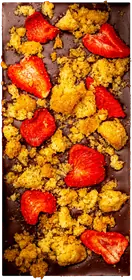
It’s a big bar, built by hand, with everything inside made from scratch. Each STUFFT bar is a thick shell of our own dark chocolate, made from the bean, filled with layers we build ourselves: ganache, caramel, nut butters, something crunchy. It’s big enough to share.

A recent one, Coconut Almond Dream, held a thick coconut filling made from scratch, part of it toasted golden, with whole roasted almonds pressed in. Espresso Martini layered a dark chocolate ganache made with espresso liqueur under a white chocolate “crema” made with real espresso and cream. When a bar has caramel in it, we make the caramel with grass-fed butter. A new one comes out most Thursdays as part of our weekly limited release. We make each one in a small batch, and they often sell out within the week.

Is expensive chocolate worth it?
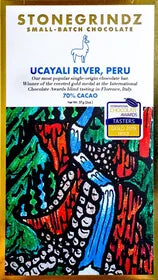
Only your tongue can answer that, so try a side-by-side tasting. Taste one of our single-origin bars next to a supermarket bar, slowly: let a square melt on your tongue instead of chewing it. If you can taste the dark cherry in our Ucayali River, Peru 70% or the citrus in our Ambanja, Madagascar 70%, you have your answer. Our guide on how to taste chocolate like a judge walks you through it.
Keep reading: What is single-origin chocolate? · How chocolate is made, from bean to bar · The Cacao Library
Sources
- Trading Economics, “Cocoa” (price on Oct 30, 2026; the December 2024 record; warehouse stocks; the StoneX forecast), read Nov 1, 2026.
- International Cocoa Organization, Quarterly Bulletin of Cocoa Statistics, Vol. LI No. 2, production of cocoa beans, May 30, 2025, read Nov 1, 2026.
- FRED Blog, Federal Reserve Bank of St. Louis, “Why is chocolate so expensive?,” Feb 12, 2026, read Nov 1, 2026.
- Natalie Ho, Monthly Labor Review, US Bureau of Labor Statistics, September 2026, read Nov 1, 2026.
- Mumbi Gitau, Harry Black and Ilena Peng, Bloomberg, republished by The Star, Dec 22, 2025, read Nov 1, 2026.
- KPMG, “United States removes reciprocal tariffs on certain agricultural products,” Nov 17, 2025, read Nov 1, 2026.
- Fairtrade International, cocoa price announcement, Dec 11, 2025, read Nov 1, 2026.
- What we pay for cacao: our own purchase prices. Our ingredients, bar size, roasts, awards and shipping: our product listings and wrappers, the STUFFT collection and our shipping page, read Nov 1, 2026.


